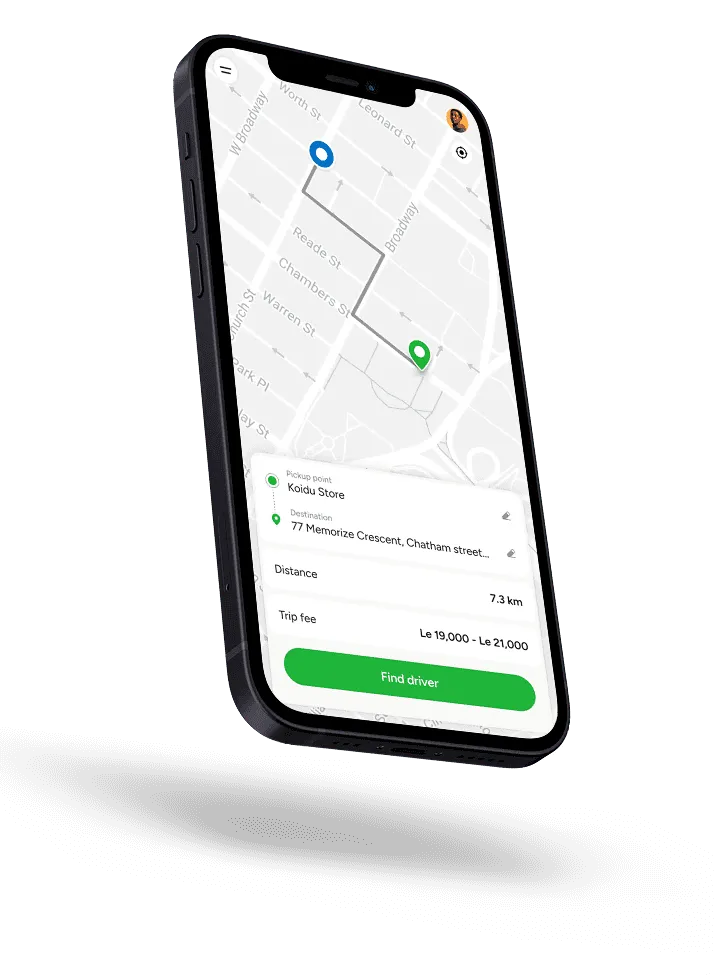
New digital behaviour
Users needed to move from familiar offline transport booking to a digital ride-booking experience.
End-to-end product design for a ride-hailing platform built for Sierra Leone and designed remotely from Nigeria.
Overview
I joined the project as the sole Product Designer, working with a four-person team to design the product from zero. I led the design across the rider app, driver app, and operations platform, covering product flows, interaction design, UI, prototyping, design systems, and implementation reviews.
The product was built and launched for the Sierra Leone market, with the first rider app version released in February 2024.
The Challenge
Users needed to move from familiar offline transport booking to a digital ride-booking experience.
The product relied mainly on Orange Money, which meant payments went directly to drivers and created a risk around platform remittance.
I designed the product from Nigeria, so I could not speak with riders and drivers directly. I relied on client feedback and worked closely with the Product Manager to test and refine key decisions.
Approach & Process
I worked from product definition and user flows through to UI, prototyping, design system, and implementation reviews.
Because I designed from Nigeria without direct access to riders and drivers in Freetown, direct field research was not possible. I worked closely with the Product Manager and engineering team to understand the local context, test assumptions, and refine the product as we built it.
Learn how people travel, pay, and use digital services in Sierra Leone through client input, stakeholder feedback, and market research.
Identify the areas where a wrong decision could affect the rider, driver, or business experience most.
Define the key journeys across booking, driver onboarding, trip management, payments, earnings, and operations.
Turn the agreed flows and product rules into clear screens and interactions.
Use prototypes and team reviews to check key flows, edge cases, and unclear states before development.
Work alongside engineers through regular stand-ups and implementation reviews to resolve gaps between the design and the working product.
Review the product as it takes shape, then refine the design based on new findings, technical limits, and changes to the product.
Designing the Rider Experience
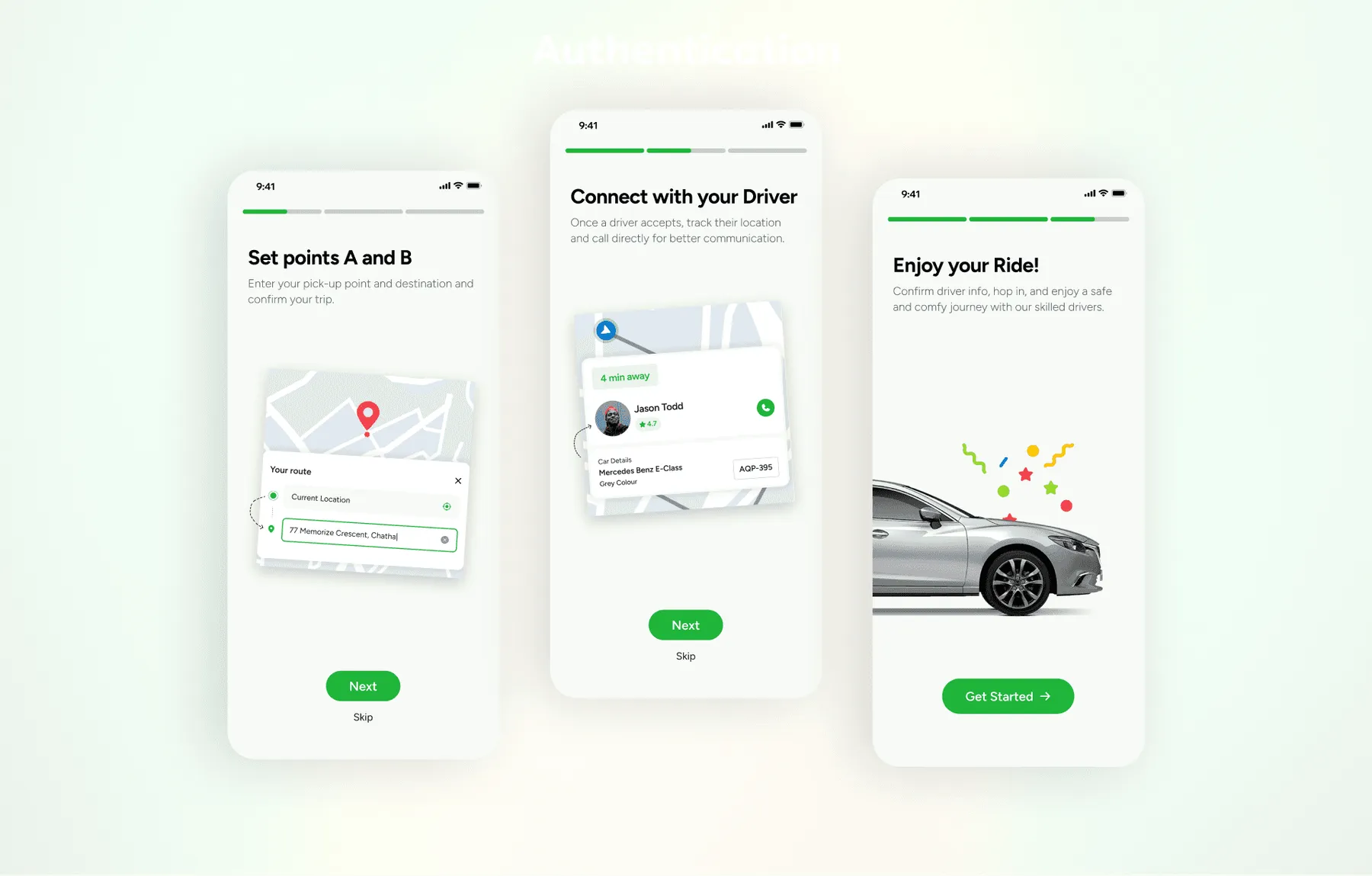
Before users could book a ride, I designed a short onboarding and account setup flow to introduce the service and get them ready to book.
I kept onboarding focused on the key steps needed to get riders into the product and ready to request their first ride.
The rider experience needed to make app-based ride booking simple for people using the service for the first time. I designed the main journey from setting a destination to completing a ride, with clear steps and states throughout the process.
Riders can review their trip and fare before placing a request.
Important driver and vehicle details are available before pickup.
The interface keeps riders informed as the trip moves from pickup to drop-off.
Riders can confirm the end of the trip and leave feedback.
Designing the Driver Experience
The driver app needed to help drivers handle each stage of a ride with clear actions and useful information. I focused on making the ride flow easy to follow while also supporting the rules that controlled driver activity on the platform.
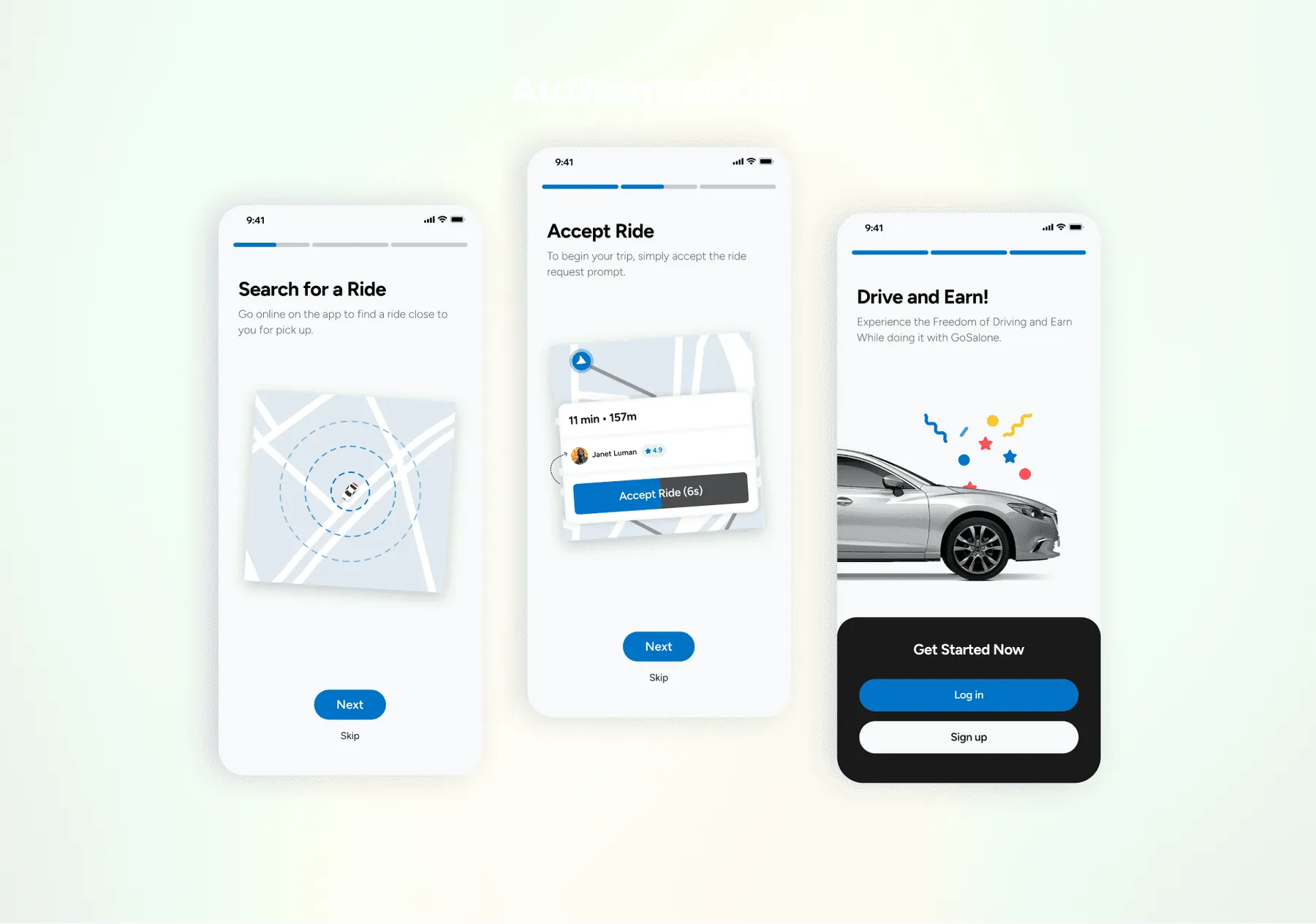
Drivers can review key trip details before accepting a request.
Clear ride states help drivers track each stage of the trip.
A clear completion state confirms the ride has ended.
Designing Earnings & Remittance
This meant drivers received payment directly, creating a risk around the platform's share of each completed ride.
I worked with the Product Manager and engineers to design a system that gave drivers visibility into their earnings while helping the platform track remittance.
Each completed ride shows the amount earned.
Drivers can see the amount due and their current remittance status.
The system reflects whether a driver's account can continue receiving ride requests based on their remittance status.
Outcome & Impact
I worked with the Product Manager and engineers through design and development.
The product launched with the core tools needed to run a ride-hailing service, including ride booking, driver matching, trip tracking, driver management, earnings, and payment tracking.
The rider and driver apps are publicly available, with the rider app first released in February 2024.
What this project taught me
I had to design a two-sided product, work within local payment limits, and make key decisions without direct access to end users.
The project strengthened how I approach product thinking, system design, and working with engineering from the start of a product to launch.
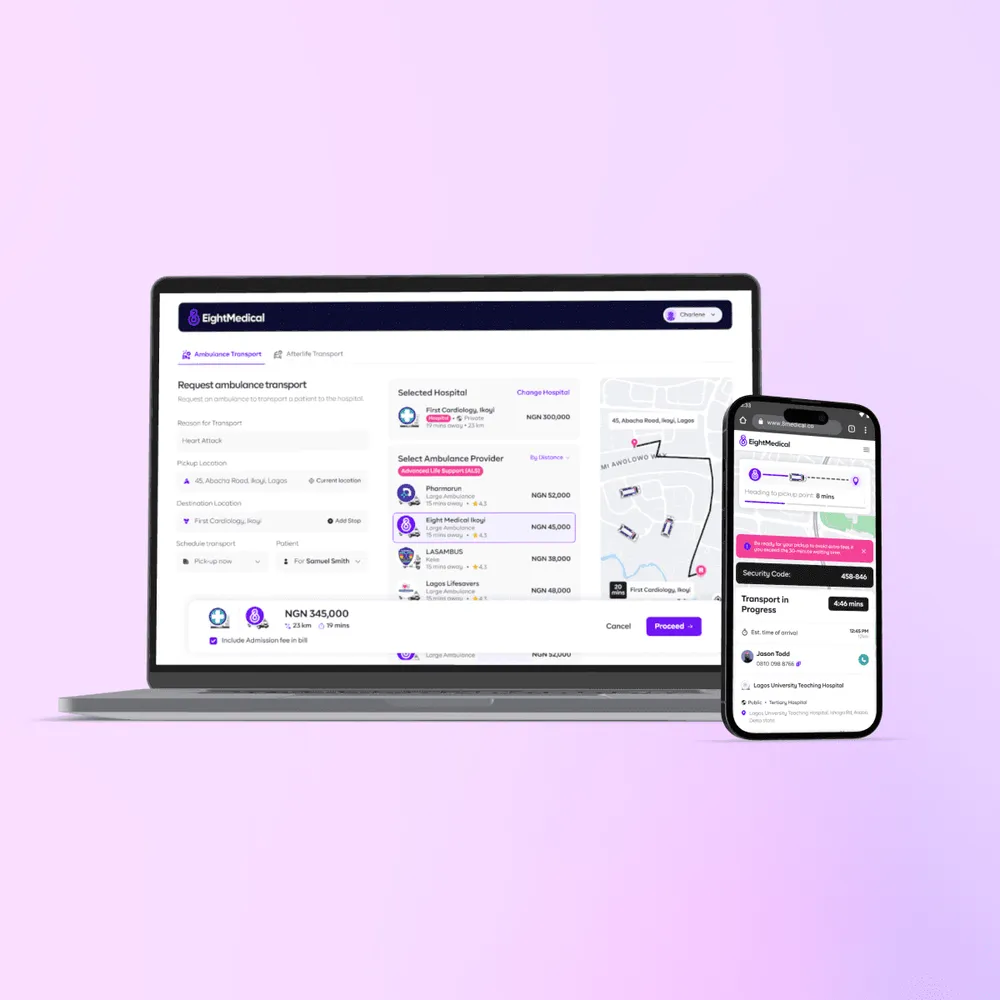
An AI-powered search, triage and transport platform connecting people in crisis to the nearest capable hospital or ambulance across Nigeria.
A radio and entertainment app redesign that makes live content, shows, podcasts, and games easier to discover and use.